Baling
Get your crop baled on time, to the right standard and without adding pressure to your own workload.
- The bale type you need, whether round, square or specialist, matched to your end use
- Protect crop quality with rapid turnaround to match weather and harvest windows
- Hay and silage baling to reduce labour and machinery strain during peak periods
- Eco-aware and best-practice agronomy from start to finish
Already know what you need? Get in touch and speak with our team today.
Send us a message
What is hay baling?
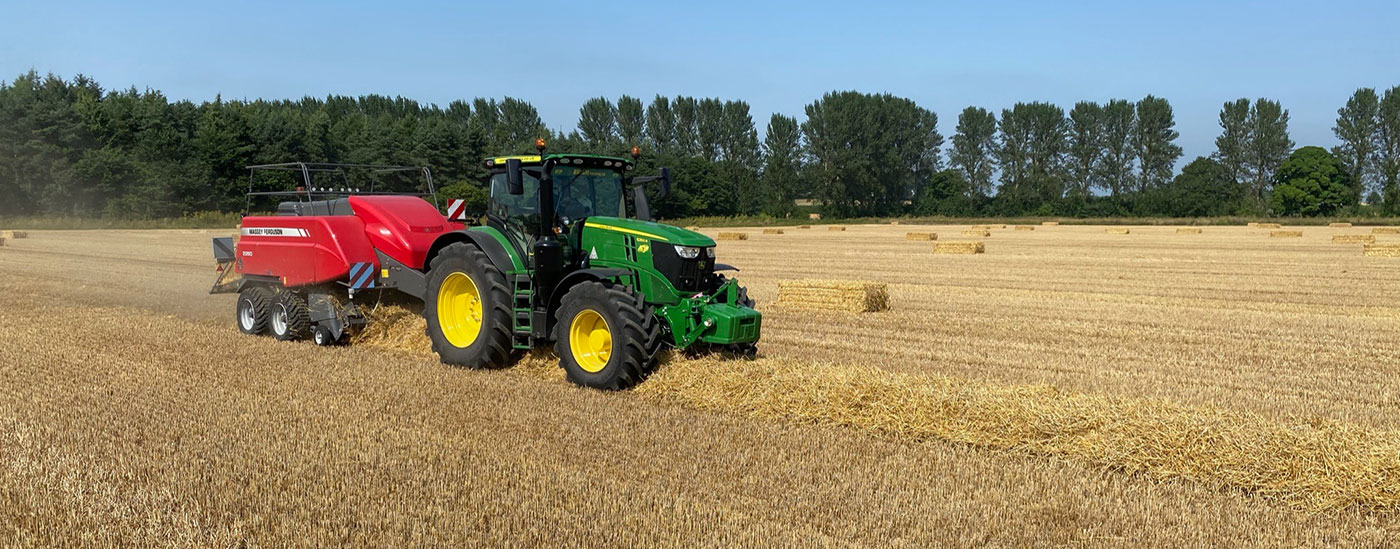
Hay baling involves cutting, collecting and compacting crops, usually a mixture of grasses, with a hay baler. The piece of farm machinery collects the hay, compacts it and wraps it inside the bale chamber, ejecting compacted bales that are easy to handle, transport, and store. Hay bales are normally made of crops such as hay, cotton, flax straw, salt marsh hay, or silage.
What is a hay baler?
Put simply, a hay baler is a machine that creates hay bales. There are two main types of hay baler, those that create round, or cylindrical, bales and then square baling to create rectangular or square bales. Both have their benefits, but their process is relatively similar; hay is picked up off of the ground and then compressed into the desired shape and size, before being pushed back onto the field as the hay baler begins the process once again.

What we bale
We provide contract baling services for:
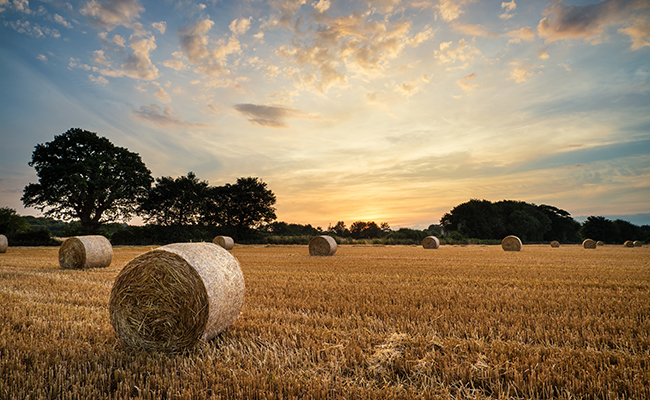
- Hay baling: clean, consistent bales for long-term forage storage
- Straw baling: efficient post-harvest round baling and square bailing to clear fields quickly
- Silage baling: time-critical baling to preserve quality and feed value as part of professional baling farming operations
Our approach focuses on consistent bale density, reliable output and working to your schedule.
Our baling equipment
We operate a modern, high-spec baling fleet designed to deliver capacity, reliability and consistent bale quality during busy harvest periods.
Two additional balers were added to the fleet to further strengthen our output and resilience:
- Kuhn round baler with optional chopping knives, providing flexibility for different crop and forage requirements
- Massey Ferguson 2150 mini Hesston square baler, offering reliable performance and consistent square bale formation
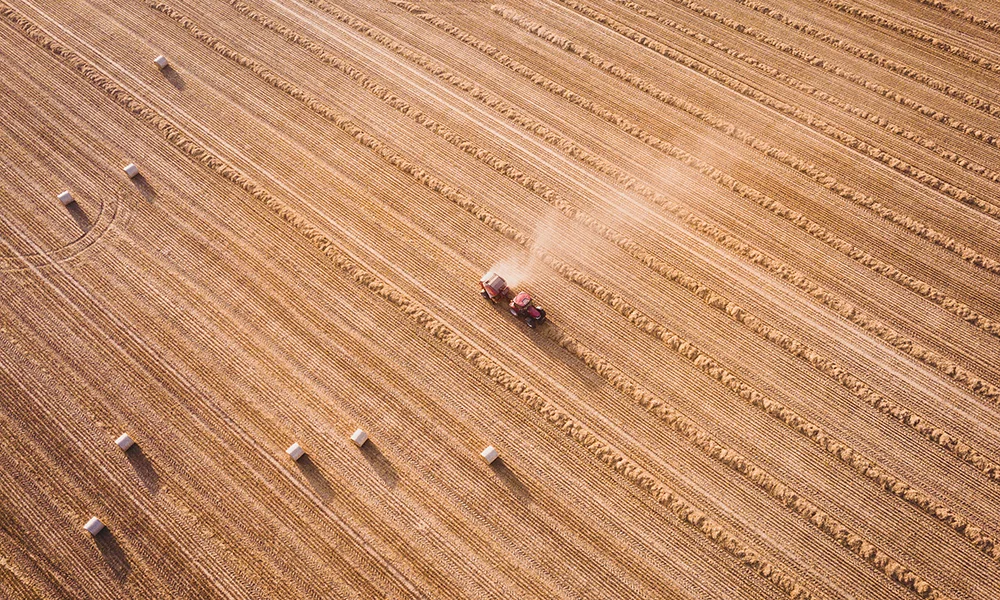
We can operate up to three round balers and three square balers simultaneously, giving us the capacity to get crops baled within tight weather windows and minimise downtime during peak season.
Bale clearance and leading can also be provided. For larger operations, a Heath Super Bale Chaser is available to efficiently clear large quantities of square bales to the headland for reloading or transport back to the farm, helping to keep soil compaction to a minimum.
Our baling setup allows us to adapt quickly to changing conditions while maintaining high standards of output and reliability.
How the service works
- Initial discussion – We confirm crop type, field access, timings and bale requirements.
- Planning & scheduling – Work is planned around weather conditions and harvest priorities.
- Baling operation – Crops are baled efficiently by experienced operators.
- Follow-up – Ongoing support or additional baling passes as required.
Our goal is to make baling straightforward and dependable during the busiest parts of the season.

Compliance & best practice
All baling work is carried out in line with industry best practice, with a strong focus on:
- Safe operation of machinery
- Careful field access and soil protection
- Minimising crop loss and waste
This ensures a professional service that protects both your land and your crop.
Why Choose AWSM Farming?
- Experienced operators who understand harvest pressures
- Modern, well-maintained baling machinery
- Flexible support during critical periods
- Reliable service you can plan around
Outsourcing baling to AWSM Farming helps reduce labour pressure, improve timing and ensure consistent bale quality.
FAQs
What types of bales do you offer?
We offer both round and square bales, depending on crop type and requirements.
When is the best time to book baling?
As early as possible, particularly ahead of busy harvest periods, to secure availability.
Do you offer wrapping or bale handling?
These options can be discussed during planning depending on your needs.
How does a hay baler work?
A hay baler collects cut, dried grass from the field, compresses it into a tight bale using rollers or pistons, then ties it with net wrap or twine before ejecting it ready for collection and storage.